Showing posts with label Reading. Show all posts

Tuesday, April 24, 2018

Week 14 Reading B:Russian Fairy Tales

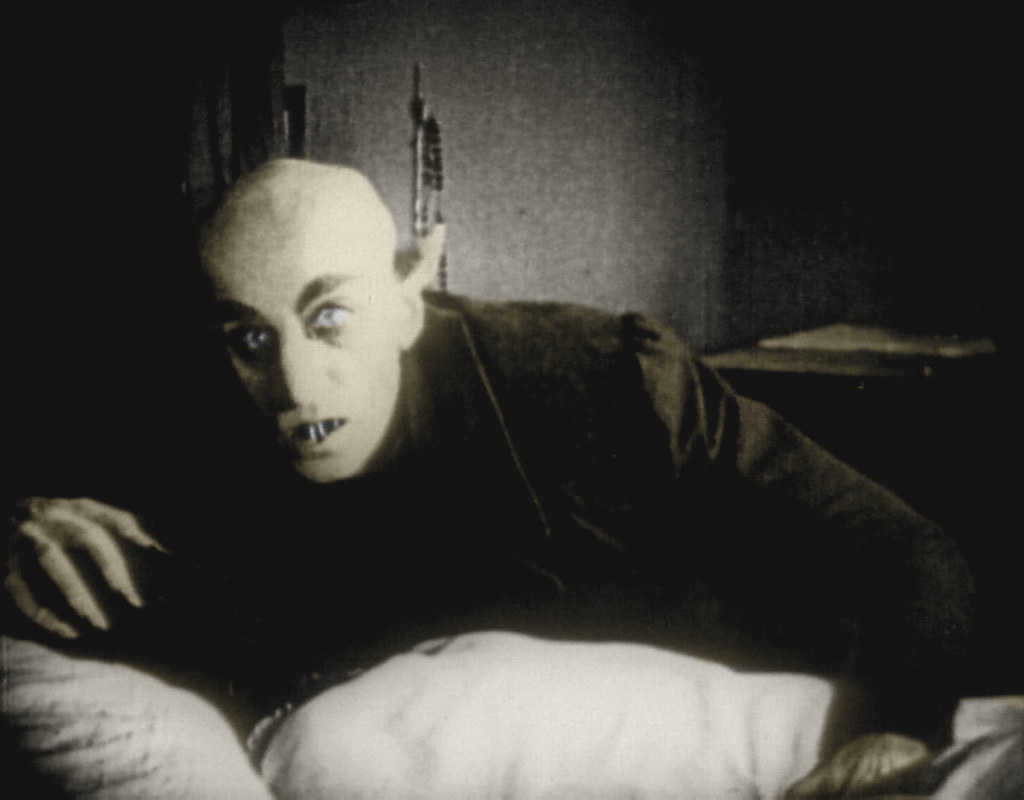
Most of these stories end badly for everyone involved. The Soldier and the Vampire is one of the only ones that has a happy ending. It's also not the one that I would have wanted to have a good ending. The soldier in the story is not a very good person. He finds out how to bring the vampire's victims back to life, and then lies about having seen the vampire and makes the victim's family pay him to help them. I guess it might be a cultural difference, but that doesn't seem like the type of heroic action that would make him deserving of the happy ending he gets.

                      Image result for nosferatu
                                                                  (Nosferatu)

Sunday, April 22, 2018

Week 14 Reading A: Russian Fairy Tales

I found the story of The Dead Mother very surprising. I thought that the ghost of the mother was coming back from the grave to take care of her baby, but then the baby died at the end. I wasn't sure if the baby died because the father and his friends interrupted the mother while she was taking care of it and that had some weird side effect, or if she had been intending to kill it the whole time so she wouldn't be alone in the after life.

                                    
                                                                     (Ghost)

Tuesday, April 17, 2018

Week 13 Reading B: Celtic Fairy Tales

I find changeling stories like Brewery of Eggshells really fascinating. In general I think that the idea of some otherworldly creatures replacing a person with one of their own kind, and the fact that this idea is so pervasive, is interesting. I used to have a book of Welsh legends that included multiple changeling stories where the mother cooked food in an eggshell to fool the changeling into revealing itself, which seems like a really weird and specific thing to get included in changeling lore.

                                
                                                                  (Changeling Twins)

Sunday, April 15, 2018

Week 13 Reading A: Celtic Fairy Tales

I liked the story of Gold-Tree and Silver-Tree for the most part. I don't like the idea that the mother would try to kill her daughter over something as stupid as beauty, but I guess that's kind of inevitable in a Snow White type of story. I like the addition of the prince having a second wife, and her being the one to save Gold-Tree.

                                   
                                                                        (Silver-Tree)

Tuesday, April 10, 2018

Week 12 Reading B: Britomart

I find the character Artegal to be really annoying. He's set up as this ideal man who's fair and kind and humble, basically the best guy in the world, but he fails to live up to that promise. Instead, he gets so upset over losing to Britomart at a tournament that he swears vengeance against her and attacks her the moment they cross paths again. And despite this obvious character flaw and the fact that he literally just tried to kill her, Britomart forgives him and falls in love instantly once she finds out who he is.

                                                 
                                                                     (Knight on Horse)

Friday, April 6, 2018

Week 12 Reading A: Britomart

Overall, I love the story of Britomart so far. She's a really cool character. She's great at fighting, always willing to help people, and doesn't take any crap from anyone. One thing I could do without, however, is the whole lovesick thing. I get that she's trying to track down the person she loves, but all the talk of how she'd rather die than be without him gets really tiresome.

                                                 
                                                           (Britomart Stained Glass Window)

Tuesday, April 3, 2018

Week 11 Reading B: Sioux Legends

The story of the War-Like Seven was interesting to me because it introduced these seven character, but they didn't really do anything. Five of them drop dead on their way to the fight, and all that the fish and the turtle really accomplished was surviving the other tribes incompetent attempts to kill them. Iktomi was there, and ended up accidentally killing everyone for the turtle and fish so they were celebrated as accomplished warriors, but it really isn't a story about Iktomi like the others were.

                                
                                                       (Illustration by Angel de Cora)

Sunday, April 1, 2018

Weel 11 Reading A: Sioux Legends

I like The Story of the Lost Wife  because it shows a woman escaping from an abusive situation, but I don't like that she ended up reconciling with and returning to her abusive husband in the end. Presumably he had changed in some way and that was why she agreed to live with him again, but this isn't really shown in the story.

                                  
                                                                          (Sioux Tepees)

Tuesday, March 27, 2018

Week 10 Reading B: Inuit Folk Tales

I don't really understand the story of Tungujuluk and Saunikoq. It seems to veer off of what it was originally about halfway through. It starts with Saunikoq being jealous and trying to kill Tungujuluk's son, but he apparently gives up on that after failing once. It then follows Tungujuluk getting revenge for that, except I don't think he actually knew that Saunikoq was trying to kill his son and not just scare people, since his revenge is basically just playing a trick on Saunikoq, who then runs away forever.


(Two Wizards)

Monday, March 26, 2018

Week 10 Reading A: Inuit Folk Tales

I liked the story of the Coming of Men because it handled the concept of death in a way I've never seen before. Rather than being a punishment for some crime, death was chosen by a human as a trade off to get light. The world couldn't really get started until people could die, and it was acknowledged that a world in which no one dies would be overcrowded and terrible. I also like how all the choices were made by women. And one of the first things humans did was decide they wanted dogs, which is relatable.

                              
                                  (Visit Greenland, Flickr)

Sunday, March 11, 2018

Week 9 Reading A: Japanese Fairy Tales (Ozaki)

The story of Kintaro focuses on his childhood a lot more than most other hero stories I've read. Rather than going on about his heroic deeds and how he became a samurai, it recounts what seems to be a fairly ordinary day when he was eight, ending with him being recruited into samurai training and a brief summary of his adult life.

                                                      
                                                                      (Kintaro Doll)

Tuesday, February 27, 2018

Week 7 Reading B: Japanese Mythology

The story of Urashima seemed very familiar to me, even though I had never read it before. I have read stories following the exact same pattern, only with fairies instead of a sea goddess. The fairy stories I had read previously were from the UK, but they followed the same pattern of a person going into another realm and falling in love with someone there, living for generations but not noticing the passage of time, asking to visit home, and then realizing how much time had passed and dying. I find it interesting that this story structure would appear in two cultures so far removed from one another.

                                     
                                                                          (Urashima)

Monday, February 26, 2018

Week 7 Reading A: Japanese Mythology

The story of The Miraculous Mirror is kind of confusing to me. I don't understand why Amaterasu would run away from her brother Susa-no-wo. Even if he's evil and was there to harm her in some way, it seems like she would be able to take care of the situation. She's literally the queen of heaven, so shouldn't she be more powerful than her brother, not to mention have body guards or an army to protect her. I also don't understand how she could be tricked into thinking her reflection was a rival and coming out of her cave to fight it. Again, she's the queen of heaven, not a dog who doesn't understand how mirrors work.

                                 
                                                                          (Amaterasu)

Tuesday, February 20, 2018

Week 6 Reading B: Indian Fairy Tales

The plot of The Prince and the Fakir doesn't make a lot of sense to me. It might be some sort of translation error, but the timeline just doesn't work. At the beginning of the story, the Fakir tells the king that he will be back for one of his sons, who haven't been conceived yet, in a year. But when he takes the prince, he is able to gather fuel for the fire, talk, and fight. He also says that he used to fight when he was young, and then gets married, implying that he's an adult. I also don't understand why he didn't just tell his father-in-law that he was a prince, rather than staging an elaborate hunting trip where he used his pet tigers to kill a bunch of animals for him.

                                
                                                                   (The Prince and the Fakir)

Friday, February 16, 2018

Week 6 Reading A: Indian Fairy Tales

I was really surprised in the story of Harisarman that he was able to pull off his deception. I feel like a lot of times, in that type of story, a person who lies about having some sort of fantastic power would get found out, and the story would serve as a lesson about not lying. But Harisarman manages to fake his way out of situations that should have required magical powers through mostly good luck and coincidence.

                                  
                                                                       Harisarman

Tuesday, February 13, 2018

Week 5 Reading B: Arabian Nights

Aladdin was one of my favorite Disney movies growing up, so I was excited to read the original story this week. I was surprised by how different this version was, and especially how differently Aladdin was characterized between the two. In the first part of Aladdin and the Wonderful Lamp, Aladdin is described as careless and idle, and there is never any indication that he has gotten over these qualities. Although he is given various positions of power that would have required a lot of responsibility later in the story, there is nothing in his characterization that would suggest he could handle these responsibilities. He was also chosen to retrieve the lamp because the magician thought he was foolish, not because he possessed any special qualities that allowed him to get the lamp.

                                             
                                                               (Aladdin and the Genie)

Sunday, February 11, 2018

Week 5 Reading A: Arabian Nights

Scheherazade is a seriously amazing character. The amount of courage it must take to volunteer for a position that could very well lead to your death in order to protect other people is enormous. I'm also impressed that she's able to remember or come up with all of these stories in the middle of a literal life and death situation. There isn't a lot of room for the story to really focus on her, since she's the one telling most of it, but she's definitely my favorite character.

                                     
                                                              (Scheherazade)

Saturday, February 3, 2018

Week 4 Reading Notes: Ovid's Metamorphoses II Part A

The first four parts of Ovid's Metamorphoses II are focused on the story of Persephone, but they don't really treat her as the main character. In fact, she's barely a character at all. How she feels and what she thinks is never really explored, and the whole story is just about other people reacting to her kidnapping for plot reasons. I think it would be interesting to tell the story with more of Persephone's point of view, and maybe also take the plot in a less kidnappy direction.

                                                 
                                                           (Persephone, by Rossetti)

Tuesday, January 30, 2018

Week 3 Reading Notes: Jewish Fairy Tales Part B

The Rabbi's Bogey Man- The pov for this story is closest to third person, without any true viewpoint character. Rabbi Lion is definitely the main character and focus of most of the story, but it isn't really told from his perspective. Rather than write what the rabbi is thinking, the story has him speak out loud to an empty room so an outside observer would be able to overhear. The first indication of emotion is that he looks troubled, not that he is troubled, and when the story does state how he feels there isn't any attempt to convey those emotions. During the scene with the king, the reader has just as much insight into how he feels as they do the rabbi.

I think it would be interesting to rewrite this story from the viewpoint of the first golem. It seems like she's capable of thinking, even if she has to obey orders, but since she's less rebellious than the second golem the reader never knows what she might be thinking.

                                                       
                                                             (The Rabbi's Bogey Man)

Saturday, January 27, 2018

Week 3 Reading Notes:Jewish Fairy Tales Part A

The Quarrel of the Cat and Dog

I thought it was interesting how the story started with the two animals being friends, and that it made it almost sad when they ended up as enemies at the end. However, I don't think it really makes sense how they became enemies. I don't get why the cat wanted them to never see each other again, or why she was so angry when the dog accidentally showed up again, especially since there was enough room and food for both of them.

I also thought it was cool how the dog was shown fulfilling some of the jobs humans train dogs to do for other animals. He acted as a guard dog for the wolf, hearing approaching danger and going out to chase it away, (although the wolf probably would have been better suited to fighting off wild animals) and he warned the sheep when the wolves were coming like a sheep dog.

                                         
                                                         (Etching by Hendrik Hondius)